Abstract
Against the backdrop of large-scale post-war infrastructure reconstruction across the Middle East, solar panels and energy storage systems have become core supplies for local power restoration. Many importers pursue low-cost unlicensed solar products without formal brand authorization. Such transactions expose overseas buyers to severe intellectual property lawsuits, customs seizure risks, and invalid warranty liabilities. This paper systematically analyses legal risks and after-sales pitfalls caused by unauthorized solar exports. It further elaborates the necessity of selecting officially authorized distributors and compliant brands, highlighting SIRO’s standardized authorization system, verified product quality, regional service network and long-term market commitment. For Middle East reconstruction projects, cooperating with SIRO via formal authorized distribution channels guarantees legal security, stable after-sales support and sustainable project returns. Word Count: 960
1. Introduction
Post-war reconstruction across the Middle East drives surging demand for off-grid solar and energy storage equipment. Local governments, EPC contractors and distributors prioritize reliable power facilities to rebuild residential areas, hospitals and industrial zones. Intense market competition attracts numerous informal suppliers offering low-price solar modules without formal brand export authorization. Many buyers underestimate hidden risks, mistakenly believing product functionality alone can secure project success. Without legitimate distribution licensing, importers bear primary legal liabilities once trademark or patent infringement occurs. For long-cycle infrastructure projects in unstable regional environments, compliance cannot be sacrificed for short-term cost advantages. Choosing SIRO with official authorization delivers legal certainty, consistent quality and traceable global after-sales services.
2. Core Risks Brought by Unauthorized Solar Imports for Overseas Buyers
2.1 Legal Risks
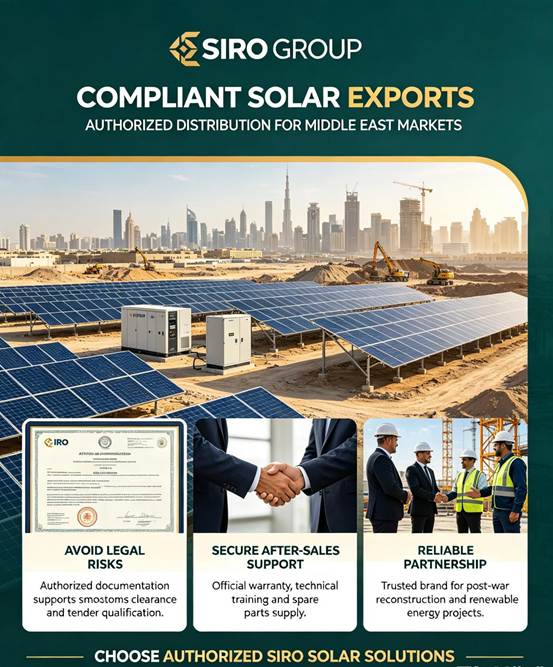
All GCC countries implement unified GCC Trademark Law and strict customs intellectual property enforcement. If importers receive solar goods exported without brand authorization: First, customs authorities have rights to detain, confiscate or destroy infringing shipments. Delays will disrupt construction schedules for post-war reconstruction projects, triggering liquidated damages under EPC contracts. Second, brand owners can file civil lawsuits against local importers, demanding compensation for trademark infringement. In severe cases, administrative fines and commercial operation restrictions will be imposed. Third, unauthorized goods cannot participate in official government reconstruction tenders. Most public infrastructure projects require complete brand authorization documents for bidding qualification. Unlicensed solar products automatically disqualify tender applications.
2.2 After-Sales and Technical Risks
Genuine brand warranty services only apply to products sold through formally authorized channels. Unauthorized grey-market solar panels are excluded from official global warranty coverage. When modules suffer attenuation, hot spot failure or corrosion under harsh desert climate, importers cannot obtain factory technical support, spare parts replacement or onsite maintenance. Repair costs and power generation losses fall entirely on buyers. In post-war regions with limited technical resources, lack of manufacturer support will lead to long-term system downtime. Besides, unauthorized batches often lack standardized testing and regional climate adaptation design, increasing failure rates in high-temperature, dusty Middle East environments.
3. Why Officially Authorized SIRO Brand Is the Preferred Choice for Middle East Markets
SIRO Group has built mature global brand management systems and standardized regional distributor authorization mechanisms. All Middle East partners sign formal distribution agreements with complete export authorization documentation.
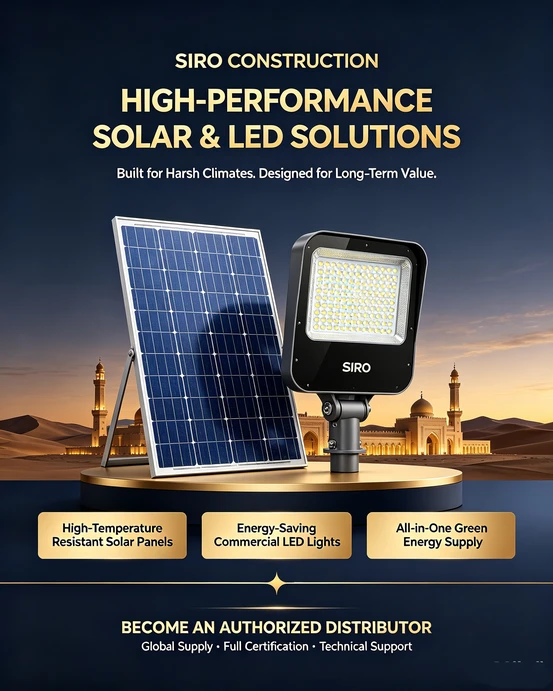
First, full legal compliance. Every shipment of SIRO solar panels carries complete authorization certificates, product test reports and certification files, supporting smooth customs clearance and government tender participation. Importers avoid seizure and litigation risks. Second, guaranteed after-sales system. Authorized partners enjoy official 25-year module power warranty, centralized technical training, regional spare parts inventory and remote engineering support, which is critical for long-cycle reconstruction projects. Third, targeted product optimization. SIRO develops solar panels adapted to Middle East extreme climate, optimizing heat resistance, dustproof performance and anti-corrosion specifications for off-grid energy storage systems widely used in post-war areas. Fourth, stable long-term market strategy. SIRO continues registering regional product certifications, investing in local market development and establishing long-term cooperative relationships with distributors, rather than pursuing one-off irregular export transactions.
For Middle East post-war reconstruction scenarios, compliance risk prevention is far more important than short profit margins. Unlicensed low-cost goods may create huge hidden losses, while authorized SIRO cooperation provides stable, predictable business development.
4. Frequently Asked Questions (FAQ)
Q1: If the solar panels have identical appearance, does it still count as infringement without brand export authorization? A: Yes. Trademark rights apply regardless of product quality. Even if the hardware specifications are consistent, importing goods without written brand export authorization violates GCC trademark regulations. Customs detention and civil compensation risks remain fully valid.
Q2: Can local maintenance workshops replace official manufacturer warranty for unauthorized solar panels? A: No. Third-party maintenance cannot replace official factory warranty. Severe module failures require original factory components and technical parameters. Informal repairs cannot guarantee power generation performance and will invalidate any potential claim basis.
Q3: What documents will SIRO provide to authorized Middle East distributors for customs and tender use? A: SIRO issues formal distributor authorization letters, brand export permits, batch product conformity certificates, IEC test reports and regional certification documents. All files are legally valid for customs clearance and government project bidding.
Q4: Why is authorized compliance more critical for post-war Middle East reconstruction projects? A: Post-war infrastructure projects rely heavily on government funding and international donor support. Project auditors require complete supply chain compliance records. Any infringement incident will suspend project payment and damage the contractor’s market reputation permanently.
5. Conclusion
Unauthorized solar exports create irreversible legal, financial and operational risks for Middle East importers. In the booming post-war reconstruction market, sustainable business growth must be built on full compliance. SIRO Group provides standardized brand authorization, climate-adapted solar products and integrated after-sales support. Choosing officially licensed SIRO solar solutions enables distributors and EPC contractors to seize regional renewable energy opportunities safely, support local power infrastructure restoration, and achieve mutually beneficial long-term development.
References
[1] GCC Unified Trademark Law, 2017 Revised Edition [2] HAS Law Firm. Parallel Imports and Grey Market Goods Risks in UAE, 2026 [3] IndexBox. Middle East Solar & Energy Storage Import Compliance Report, 2026 [4] Dastoor Legal. IPR Border Enforcement Procedures for GCC Customs, 2025