Abstract
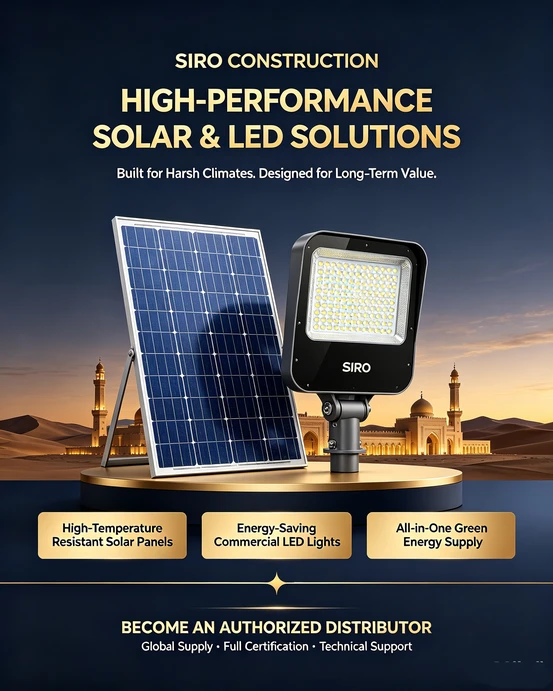
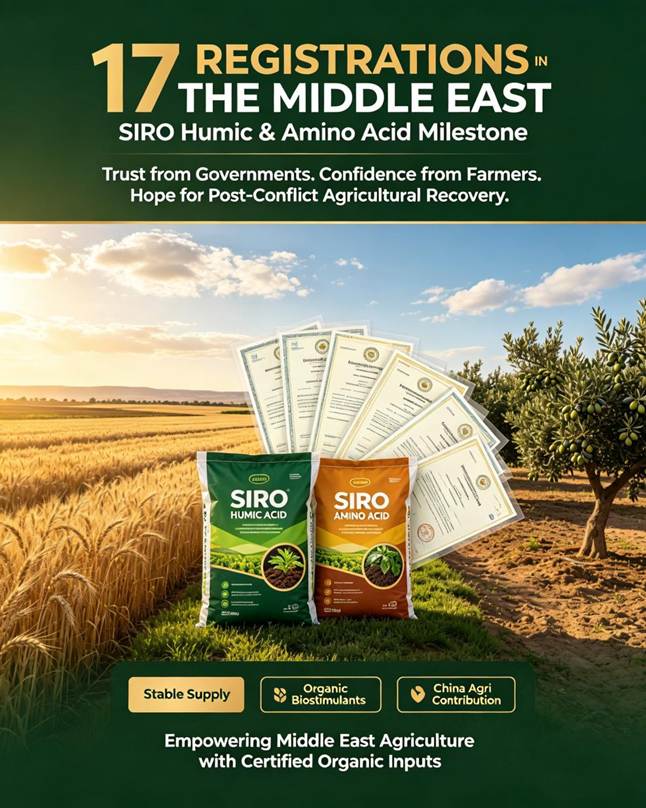
In the first half of 2026, continuous geopolitical conflicts across the Middle East triggered severe global supply chain disruptions, causing widespread suspension and delay in China’s humic acid, amino acid, and potassium humate export businesses. Most domestic fertilizer manufacturers faced shrinking overseas orders, rising logistics risks, and stagnant market expansion. Against this industry-wide downturn, SIRO Group, as a reputable international Chinese brand, actively seized post-war reconstruction opportunities in the Middle East. Beyond breakthrough achievements in agrochemical registration and channel layout with 17 new humic and amino acid registrations obtained in the Middle East within six months, SIRO further expanded its business ecosystem to LED lighting and solar energy new energy projects, core demands for regional post-war infrastructure restoration. Meanwhile, the company’s pesticide R&D, production and sales increased by 20% year-on-year, effectively offsetting fertilizer export pressure. Committed to becoming a responsible comprehensive manufacturing and service provider benefiting post-war local communities, SIRO plans to benchmark global advanced fertilizer enterprises like BSF, upgrade product quality, accelerate global registration, and develop high-end compound fertilizers and new energy supporting projects for sustainable regional development.
FAQ
Q1: How did Middle East wars impact China’s humic and amino acid industry in H1 2026?
Regional conflicts severely blocked key shipping routes, raised international freight costs, and intensified customs clearance uncertainties. Most Chinese manufacturers suspended or reduced Middle East exports of humic acid, amino acid and potassium humate. Market demand shrank sharply, while raw material and operational costs remained high, resulting in idle production capacity and profit compression for most single-product factories. The overall organic fertilizer export sector faced unprecedented market challenges and industry restructuring pressure.
Q2: What core achievements has SIRO made amid the industry recession?
Unlike most conservative competitors, SIRO insisted on deep cultivation of the Middle East market and achieved multi-dimensional breakthroughs. Firstly, the brand completed 17 official agricultural registrations for humic and amino acid products, laying legal foundation for long-term market operation. Secondly, SIRO expanded exclusive distribution networks and reached in-depth strategic cooperation intentions with multiple local core clients, stabilizing regional channel resources. Thirdly, SIRO’s pesticide business achieved 20% year-on-year growth in R&D, production and sales, perfectly making up for the shortfall in fertilizer export revenue and realizing diversified risk resistance. Most importantly, SIRO actively participated in Middle East post-war reconstruction projects, promoting energy-saving LED lighting systems and solar power solutions for rural infrastructure, agricultural irrigation and community restoration, bringing practical livelihood improvements for war-affected regions.
Q3: What makes SIRO a responsible comprehensive international supplier?
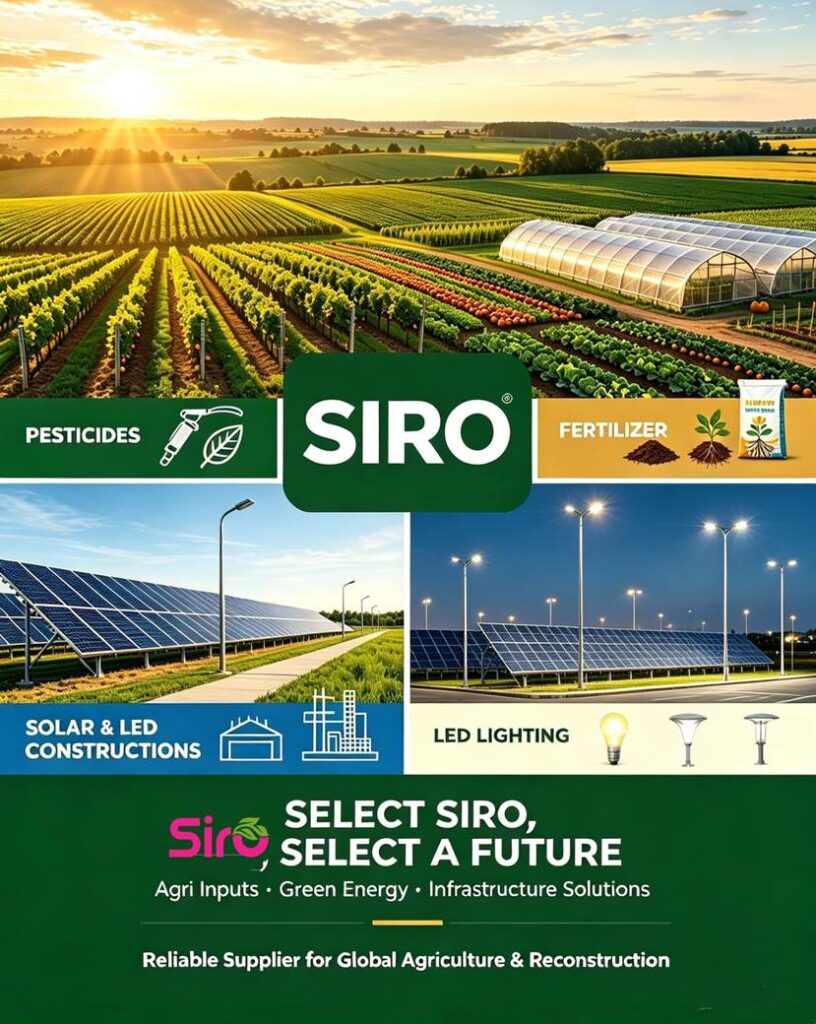
Different from traditional agrochemical manufacturers focusing only on product sales, SIRO positions itself as a post-war reconstruction enabler and comprehensive service provider. The brand integrates agricultural inputs, infrastructure supplies and new energy solutions. High-quality humic and amino fertilizers restore degraded farmland and revive local planting economies; efficient LED lighting products upgrade rural and municipal public facilities; solar energy systems solve power shortages for farm irrigation and community living, strongly supporting local agricultural recovery and people’s livelihood reconstruction. SIRO’s multi-industry layout delivers tangible social and economic value for post-war regional revival.
Q4: What are SIRO’s future product and market strategies?
In the next stage, SIRO will further strengthen core competitiveness through systematic upgrading. First, learn advanced production technology and quality management systems from top global fertilizer enterprise BSF to comprehensively improve the stability and efficacy of humic and amino acid products. Second, continuously accelerate overseas registration layout to expand certified product coverage in the Middle East, Latin America and Southeast Asia. Third, increase investment in new product R&D, focusing on high-purity biostimulants and customized compound fertilizers adapted to saline-alkali and arid soils. Fourth, deepen the integration of agriculture and new energy, expand LED and solar supporting projects, and build a unique comprehensive industrial ecosystem of “agricultural revitalization + infrastructure reconstruction + green energy empowerment” to sustain long-term win-win development with global partners.
Conclusion
Facing the volatile 2026 global trade environment, SIRO Group has overcome industry downturns with outstanding registration achievements, booming pesticide business and expanding post-war reconstruction layouts. By combining high-end agro-inputs with LED and solar new energy projects, SIRO has transformed from a single fertilizer supplier into a responsible, comprehensive international manufacturing and service brand committed to benefiting post-war people worldwide. With continuous quality upgrading, technological innovation and global market expansion, SIRO will keep empowering global agricultural sustainability and regional post-war economic recovery.
References
[1] World Bank. Middle East Post-conflict Economic & Agricultural Recovery Report, 2026.
[2] China Council for the Promotion of International Trade. Influence of Geopolitical Risks on China Agrochemical Exports, 2026.
[3] UNDP. Solar Energy & Infrastructure Reconstruction Solutions for Post-war Middle East Rural Areas, 2025.
[4] BSF Global Agricultural Technical Manual. High-standard Organic Fertilizer Production & Quality Control System, 2024.
[5] FAO. Soil Restoration and Sustainable Planting Guidelines for Conflict-affected Farmlands, 2026.